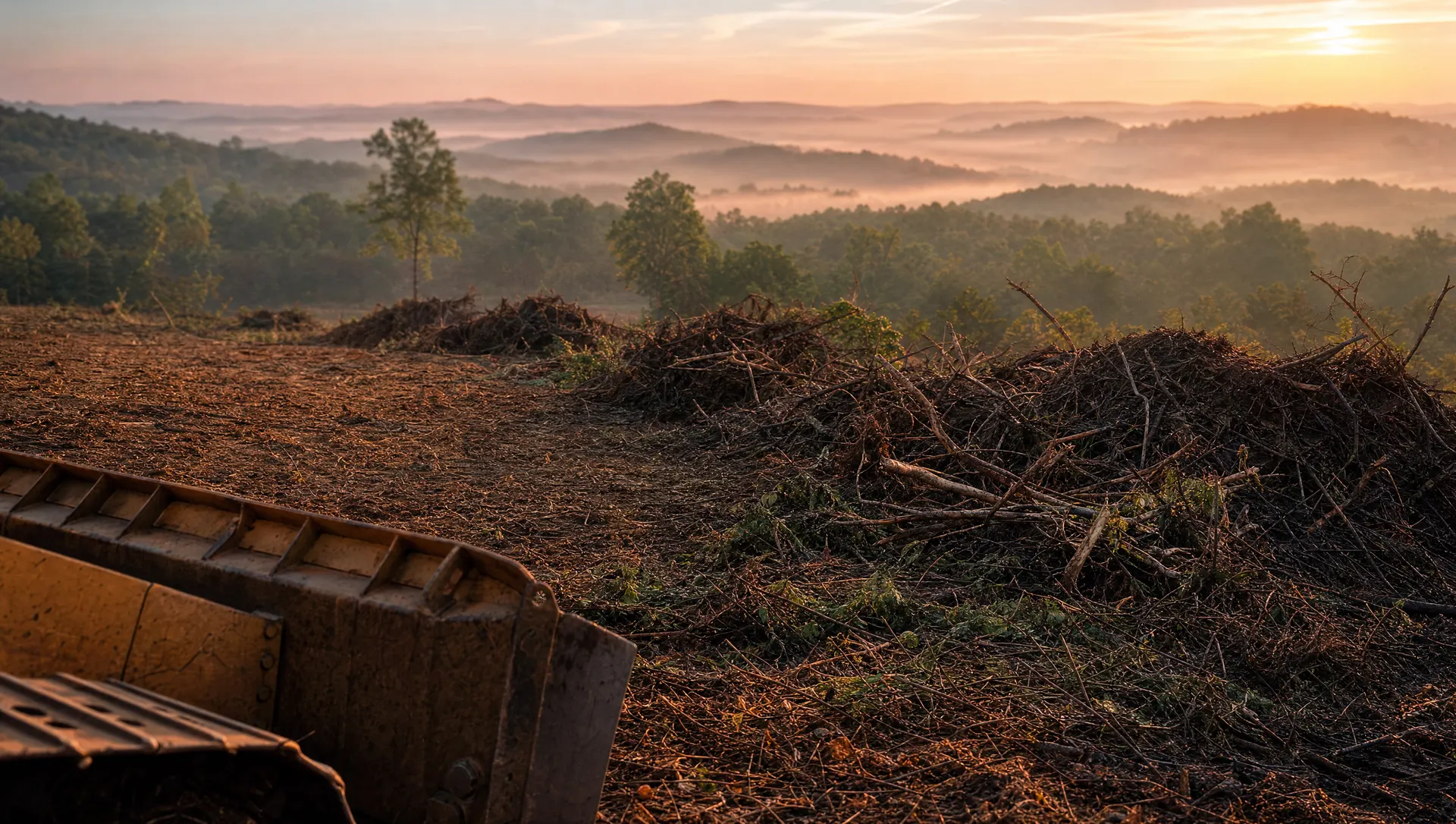
Pasture Reclamation in West Plains, MO
A lot of pasture around Howell County has lost ground to cedar and brush a little at a time, until acreage that used to carry cattle or cut for hay is mostly thicket. Pasture reclamation is about taking that ground back — clearing out the cedar, brush, and volunteer growth that's moved in and getting the acreage back to grass.
West Plains Land Clearing works with landowners across the West Plains area on pasture reclamation, from a few acres of cedar encroachment along a fence line to whole tracts that have grown up over the years. Cattle producers, hay operations, and landowners just trying to keep ahead of encroachment all call for similar reasons — cedar and brush took over ground that used to pull its weight, and it's time to get it back.
What Pasture Reclamation Includes
Reclaiming pasture typically involves:
- Clearing cedar and brush that's encroached on grazable or hayable ground, usually by mulching
- Opening up fence lines that have disappeared into brush, so fencing can actually be inspected or replaced
- Clearing around ponds, waterways, and low spots where brush tends to thicken up fastest
- Leaving mulched material on the ground as cover rather than hauling it off, which helps hold soil until grass reestablishes
- Coordinating timing with your seeding or overseeding plans, when reclaiming pasture is part of a bigger plan to get the ground productive again
Glade ground — the thin-soil, rocky openings scattered through a lot of Ozark pasture and timber — often gets particular attention during reclamation, since cedar tends to crowd into those areas first and the grass cover there can be thinner to begin with.
Reclaiming Ground in Cattle Country
Howell County is cattle country, and grass is the product for a lot of landowners around West Plains. When cedar and brush take over a pasture, that's not just an eyesore — it's grazable acreage sitting unproductive, and it usually keeps getting worse each year cedar is left alone.
Eastern red cedar is the main driver. It's native to Missouri, but without fire or regular management, it spreads across open pasture and glade ground steadily, and a lot of "wooded" hillsides around Howell County were open pasture a generation or two ago. Blackberry brambles do a version of the same thing at ground level, especially along fence lines, low spots, and anywhere equipment hasn't been able to reach with a bush hog in a while.
Mulching is usually the method of choice for pasture reclamation, since it clears the standing growth without stripping the ground bare the way pushing and dozing would. That matters for grazing ground specifically — pasture that keeps more of its topsoil and existing grass base intact generally has an easier time coming back into production than ground that's been scraped down to subsoil.
A lot of the pasture we reclaim gets folded back into an existing grazing rotation or hay schedule once it's usable again, rather than treated as a one-time project. Knowing whether reclaimed ground is headed for grazing, hay, or just general upkeep can shape decisions like how much mulch is left on the surface and how soon cattle or equipment go back on it.
When to Call for Pasture Reclamation
Pasture reclamation is worth scoping out when:
- Grazable acreage has visibly shrunk over the past several years as cedar or brush spread
- Fence lines are no longer visible or walkable because of brush and brambles
- You're leasing out pasture and want to get more usable acreage under the lease
- You've taken over or inherited ground that hasn't been actively grazed or maintained in years
- You want to reclaim ground ahead of reseeding or overseeding for hay or grazing
What Pasture Reclamation Costs
Cost typically tracks with acreage and how dense the cedar and brush have gotten. Scattered cedar just starting to move into a pasture costs less to clear per acre than a mature, dense stand that's had a decade or more to establish, since heavier growth simply takes longer to mulch through. Terrain factors in too, since Howell County pasture ground often includes some mix of flat bottom ground and steeper hillside. Access matters as well — pasture with a gate and a clear path in is a more straightforward job than an isolated back section reachable only by working through other ground first. We give you a real number after seeing the specific acreage and density, not a flat per-acre estimate that assumes every pasture looks the same. Fencing repair or replacement is typically a separate job from the clearing itself, though opening up a fence line is often the first step that makes fence work possible in the first place.
Will the pasture be ready to graze right after clearing?
Not immediately in most cases. Mulched material typically needs some time to settle, and depending how thick the cedar was, the ground underneath may need a season to green back up, especially if grass had already thinned out under the shade of a heavy cedar stand. Some landowners overseed after clearing to speed that along; others let existing grass fill back in on its own. We can talk through what makes sense for your specific ground and timeline.
How do I keep the pasture from growing back up in cedar again?
Ongoing management is the real answer — grazing pressure, periodic mowing or bush-hogging, and catching new cedar seedlings while they're small are all far cheaper than letting a pasture grow up again over another decade and needing a full reclamation job a second time. Cedar seed spreads by birds from nearby trees and fence lines, so it rarely stops showing up entirely, but staying ahead of seedlings keeps it from turning back into a thicket.
Can you reclaim pasture without disturbing my fescue or existing grass stand?
Mulching is generally the gentler option here, since it grinds the cedar and brush standing above the grass rather than scraping the ground underneath it. Existing fescue or other pasture grass under light-to-moderate cedar cover often comes back on its own once sunlight reaches it again. Under a dense, mature stand where grass has mostly died out from years of shade, you're more likely looking at reseeding some or all of the reclaimed area regardless of method.
Get a Free Quote on Reclaiming Your Pasture
Tell us how much ground has grown up and what you're running or planning to run on it. We'll give you a straight, free quote on getting it back to grass.
Got Ground to Clear in Howell County?
Tell us about the acreage and we'll get back fast with a free, no-pressure quote.